Powered by Blogger.
Showing posts with label Opel. Show all posts

Paris 2010: Opel GTC Paris Concept

Opel GTC Paris Concept

If there's one thing we can count on from the Paris Motor Show, it's a slew of sexy hatches. Opel was first out of the gate with the GTC Paris Concept, which the automaker is pitching as an obtainable sports car that can still haul five people if the need arises. Under that creased hood sits a turbocharged 2.0-liter gasoline engine good for 290 horsepower, though as small as the GTC Paris is, we can't imagine it would take much to get the hatch to hustle.

We're digging the GTC's hunkered stance, especially in the rear, where a set of flared hips dominate the vehicle's design. If you live in the old country and your mouth is watering at the thought of this slinky German, we've got bad news for you. As of right now, Opel has no plans to bring the GTC Paris Concept to life, but we'd put money on a production version within the next year.

Read more...

Paris 2010: Opel Astra Sports Tourer

Opel Astra Sports Tourer

Opel is keeping busy, and aside from moving into a handful of new markets and pulling the sheets off of a hot concept, the German manufacturer has been whittling away on its wagon interpretation of the company's Astra. The 2011 Astra Sports Tourer wears the brand's trademark nose and sculpted sheet metal, but throws in an arching roofline for good measure. Inside, buyers can look forward to a set of snappy folding seats in the rear Opel claims should help make the car appealing to both families and small businesses looking to haul goods.

Power comes from either an uber-thrifty 95-horsepower engine or a more robust 180-pony lump, and a total of three transmissions are available – a five-speed manual, six-speed manual and six-speed automatic. The company says that European buyers can expect to see a start/stop system land on its 1.3-liter turbo-diesel engine in the Astra Sports Tourer as well

Read more...

2010 Opel Astra

2010 Opel Astra
2010 Opel Astra


2010 Opel Astra
2010 Opel Astra

2010 Opel Astra
2010 Opel Astra

2010 Opel Astra
2010 Opel Astra

2010 Opel Astra
2010 Opel Astra

Read more...

Frankfurt 2009: 2010 Opel Astra

2010 Opel Astra

By now, you've likely already seen official shots of the 2010 Opel Astra, both inside and out. Of course, catching a glimpse of a new shape under the harsh lighting of an auto show often brings a different point of view than the automaker's own glitzy press shots.

In the case of the latest Astra, though, the new car looks nearly as fetching caught with the lenses of our own DSLRs as it did in GM's official photography. We especially like the new Astra's interior furnishings, which are a major step up from the current model's rather boring and somber duds.

While the 2010 Astra won't be coming Stateside as a Saturn like the previous model, GM has promised to bring the latest Detla-based car to American shores (probably in sedan form) wearing the trademark Buick badge and chrome waterfall grille, and none of those plans are expected to change now that The General has offloaded a majority stake in Opel to Magna.

Read more...

Frankfurt 2009: 2010 Opel Insignia OPC Sports Tourer

2010 Opel Insignia OPC Sports Tourer


Meet the Opel Insignia OPC Sports Tourer. Salient facts: 325-horsepower turbocharged 2.8-liter V6, AWD, six-speed manual, eLSD torque vectoring and it's a station wagon. Oh, and get this -- it's built from off the shelf GM parts.

Read more...

2010 Opel Astra: Sporty with a Touch of Elegance


2010 Opel Astra: Sporty with a Touch of Elegance The new Opel Astra brings into the compact class its own interpretation of the brand’s award-winning design language of combining sculptural artistry with German precision first seen in the Insignia. Its strong sporty lines and elegant details add to a new handsome look. The exterior of the new generation Astra, which debuts in September at the [...]

Read more : 2010 Opel Astra: Sporty with a Touch of Elegance

Read more...

Insignia Park Assistant – The latest technology feature from Opel


Insignia Park Assistant - The latest technology feature from Opel Opel announces a new park assistance feature on the Insignia that puts an end to second-guessing on those coveted parking spaces. It is a perfect tool for car drivers who don’t have the courage to fill in a narrow spot. Or when it isn’t clear at first glance whether a car will fit or how [...]

Read more: Insignia Park Assistant – The latest technology feature from Opel

Read more...

2010 Opel Astra revealed ahead of Frankfurt debut

2010 Opel Astra

After yesterday's impromptu internet unveiling of the 2010 Opel Astra, General Motors has finally let the details out on its next-generation compact before its official debut at the Frankfurt Motor Show this September.

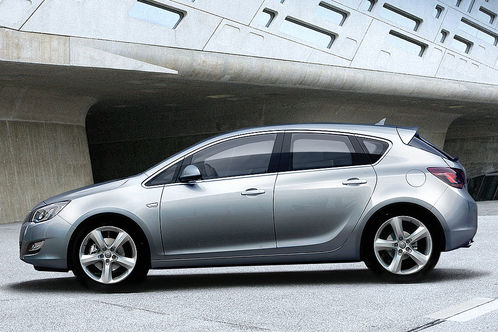
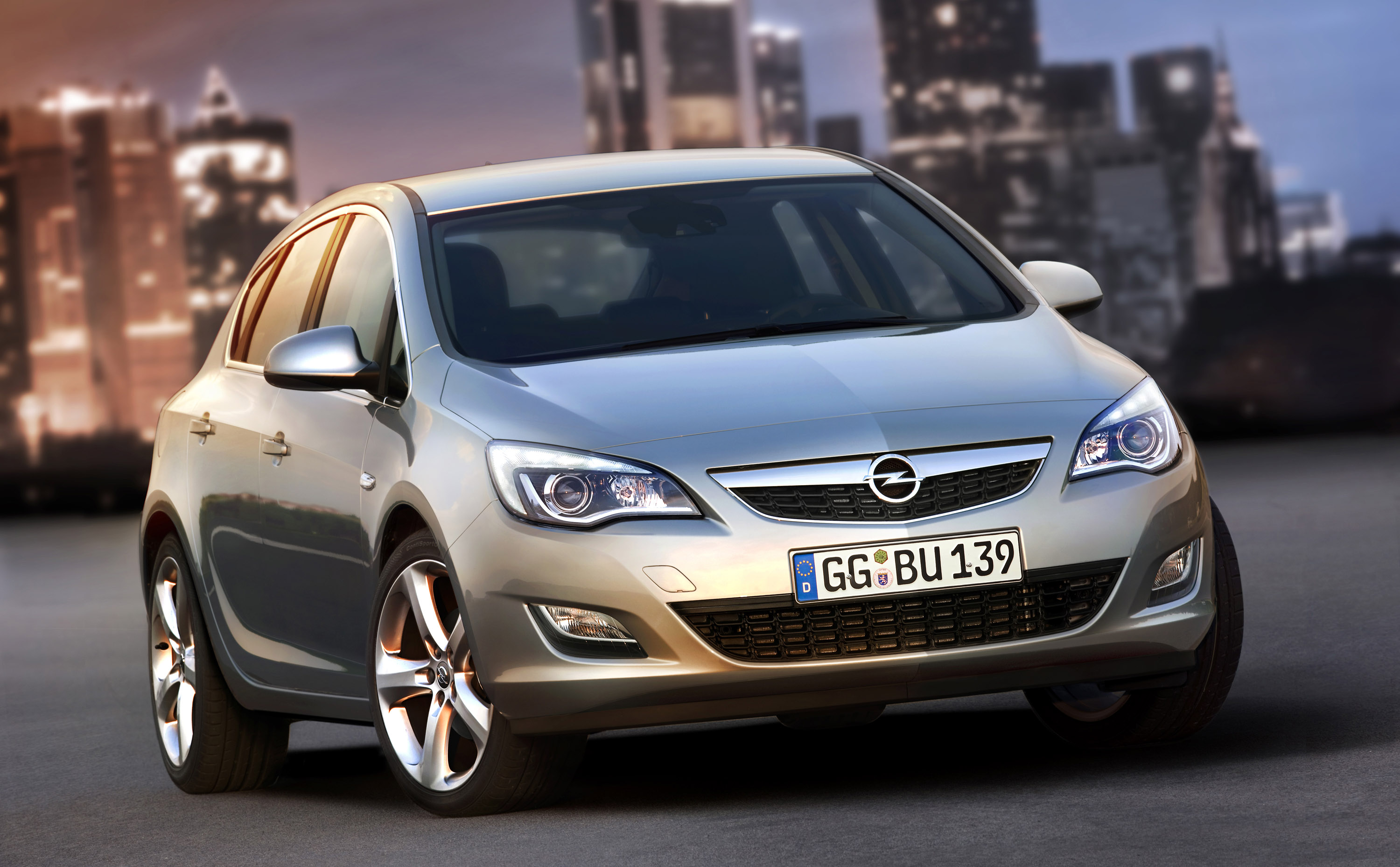
The 2010 Astra's design is inspired by the Opel Insignia, sporting all-new sheet metal that takes cues from its mid-size sibling and packages it into a smaller, more fluid shape. The fascia, headlamps and rump remain true to Opel's new design direction, along with the sculpted sides and cab-forward greenhouse.

The same Delta 2 global platform used on the Cruze and Volt underpins the new Astra, measuring in at 174 inches, with a wheelbase that stretches 2.8 inches longer than the outgoing model. The "wing and blade" design employed on the exterior carries through to the interior, and joins ergonomic seats and the new Opel Eye front camera system, which recognizes road signs and warns drivers if they veer out of their lane.

Buyers abroad have the choice of eight different engines, including four CDTI common-rail diesels with displacements ranging from 1.3- to 2.0-liters and outputs between 95 and 160 hp. Another four gasoline-powered mills, with displacements between 1.4- and 1.6-liters, doll out between 100 and 180 hp along with a new turbocharged 1.4-liter that replaces the outgoing naturally aspirated 1.8-liter and puts out 140 hp and 14% more torque, while lowering fuel consumption.

PRESS RELEASE

New Opel Astra: The First Class Compact

  • Upscale: Exceptional technologies and innovations in the compact class
  • Spirited: Athletic sculptured design promises a thrilling driving experience
  • Agile: New mechatronic chassis raises bar in class for handling and comfort
Rüsselsheim. Integrating German engineering excellence, fluid sculptural design and accessible innovative technologies, the new Opel Astra captures the philosophy which quickly made the Insignia Europe's best-selling mid-sized sedan. Opel's new compact will premiere September 17 in Frankfurt at the IAA as a dynamic five-door hatchback with elegant touches that profits from the best of Opel engineering for a thrilling driving experience.

The next generation Astra brings many comfort and safety features to the compact class that the Insignia first introduced to mid-sized cars. Exceptional technologies like an all-new mechatronic chassis, the most advanced lighting system, a front camera that recognizes traffic signs and seat technology with the best ergonomics will be available.

"Opel's unique expertise of making new technologies accessible in compact cars is really highlighted with this tenth generation. In addition, the new Astra carries the spirit of the Insignia into the compact segment with unprecedented passion and commitment to excellence," says Alain Visser, Vice President of Opel.

At 4.42 meters, the new Astra offers increased passenger space and wellness in both the front and rear thanks to a 71 mm longer wheel base. Its slim and sleek body is designed for maximum efficiency in close collaboration between the designers and aerodynamic engineers who put the car through 600 hours of testing in a wind tunnel.

Elegant proportions give it a strong, cab-forward silhouette, with a steeply-raked windshield and falling rear roofline, adding visual excitement to the traditional hatchback format. The brand's new design language – sculptural artistry combined with German precision – is now seen in a different way.

"The design themes introduced in the Insignia, like the wing and the blade, have been given a fresh interpretation in the Astra, because it's important that each Opel model has its own personality," says Mark Adams, Vice President of Design, General Motors Europe. "This is why you see double wings in each of the rear lights and a dynamic inverted blade on the flank that visually connects to the powerful movement of the rear window and C-pillar."

The interior uses the same wing and blade design cues as the exterior, creating harmony inside and out. A special effort, too, has been made to add multiple flexible storage solutions.

"Opel's mission to make high tech innovations accessible has proven to be successful in the Insignia. We've set ourselves an even more ambitious goal in bringing most of these features to the compact segment with the new Astra," says Hans Demant, Managing Director of Opel.

Developed in Rüsselsheim, Germany, the Opel Astra also comes with an all-new chassis. Its longer wheelbase combines with wider tracks and a new rear axle construction to further enhance agility and stability with no compromise to comfort.

The Opel Astra's chassis has been developed as a mechatronic system that fully integrates mechanical functions and electronic controls. Like the Insignia, it can come with the clever Opel FlexRide electronic driving system, a rarity in this class, which offers the driver three settings – standard, Sport and Tour – while being fully and continuously adaptive to changes in driving style and cornering speed.

Other innovative technical features introduced to the compact class by the new Astra:
  • A new generation of bi-xenon Advanced Forward Lighting (AFL+) that changes its intensity and reach to suit prevailing drive and road conditions using nine different lighting functions.
  • The Opel Eye front camera system, which recognizes road signs and warns the driver when the car inadvertently departs from its lane.
  • Ergonomic front seats, developed for optimal back support and safety.
The powertrain line-up focuses on efficient performance and features eight Euro 5 compliant engines. All except the lowest powered units are equipped with six-speed transmissions. One new compact automatic gear box with Active Select function, for a clutch-free selection, will debut.

The CDTI turbo diesel line-up includes four common-rail, multiple injection units from 1.3 to 2.0 liter with outputs ranging from 70 kW/95 hp to 118 kW/160 hp. All are equipped with a Diesel Particulate Filter. An ecoFLEX version with particularly low fuel consumption and CO2 emissions will naturally be part of the program.

The four gasoline engines with 1.4 and 1.6 liter give a power bandwidth from 74 kW/100 hp to 132 kW/180 hp. A new, downsized 103 kW/140 hp 1.4 Turbo replaces the current naturally-aspirated 1.8. Thanks to exceptional high-tech features in this displacement range, the 1.4 Turbo develops 14 percent more torque yet maintains sensibly lower fuel consumption.

Grounded in the compact class tradition Opel initiated in 1936 with the first Kadett, the Astra has consistently made the top-three list of Europe's best-selling compacts – a segment which accounts for 27 percent of the total car market. Astra sales make up a third of all Opel/Vauxhall purchases, for an average volume of nearly 500,000 units per year.

Read more...

2010 Opel Astra gets early web reveal

2010 Opel Astra
2010 Opel Astra
2010 Opel Astra

Opel's Astra hasn't exactly gone down a storm here in the U.S. while wearing a Saturn badge, but the four-cylinder econocar lineup is pivotal stuff in Europe, and the next-generation model could still find its way to America – even if it doesn't wear a planetary badge.

Regardless of whether or not a stateside version is in the cards, the 2010 Astra seen here is massively important. Based on General Motors' Delta platform (whose basic architecture underpins the Chevrolet Cruze and forthcoming Volt), the sixth-generation Astra will take the fight to cars like Volkswagen's Golf and Ford's Focus powered by a range of four-cylinder engines. According to CarScoop, the Astra will be available with a normally aspirated 1.4-liter gasoline inline-four, but turbocharged variants will also be available, offering between 120- to 140 horsepower and 175 to 200 Nm of torque (129 – 148 pound-feet). More power will reportedly come in the form of a 180 hp 1.6-liter turbo motor. Naturally, being a European offering, a range of diesels will also be available, including 1.3-, 1.7- and 2.0 –liter variants. A particularly miserly ecoFLEX variant is also expected in 2010.

If CarScoop's sources are right, the five-door Astra will hit showrooms in the autumn, with a three-door GTC Coupe fastback to follow. A wagon, four-door sedan, and a retractable hardtop model are expected to fill out the range thereafter.

[Source: CarScoop]

Read more...

Opel goes Voltec, Ampera coming in late 2011

Opel Ampera concept

General Motors Europe boss Carl-Peter Forster began this morning's press conference in Geneva with an acknowledgment of the dire financial straights that the entire industry is experiencing right now. Forster also candidly admitted that GM is currently investigating all options when it comes to changing its relationship with Opel, including outside equity investments. Once he got past all the bad news, however, he introduced the production-intent version of the Opel Ampera. If it looks familiar, it should. If it doesn't, well, what rock have you been hiding under for the last two years? The Ampera is the Opel badged variant of the Chevrolet Volt. It uses the same Voltec powertrain as the Volt, as well as most of its body.

The main differences are the markedly more aggressive front and rear fascias and the black (rather than white) interior. Like the Volt, most of the front fascia is closed off to optimize aerodynamics. The styling of the nose is a mix of the 2007 GTC and Flextreme concepts, and we rather like the bold new look, particularly the chevron-like forms that grow downward from the headlamps.

The Ampera is planned for production in late 2011, about one year after the Volt. A right-hand drive Vauxhall version is scheduled to launch a year after that.


March 2, 2009


Geneva World Premiere: Opel Ampera to Debut in 2011

Electric car with 500 km extended range

Geneva/Rüsselsheim. The revolutionary Opel Ampera today celebrated its world premiere at the 79th Geneva Motor Show. General Motors Europe president, Carl-Peter Forster, unveiled the extended-range electric vehicle and announced plans to put the car into production in late 2011.

The Ampera will also be offered with right-hand drive in the United Kingdom by Opel's sister-brand, Vauxhall.
"The Opel Ampera further demonstrates GM's leadership in the electrification of the automobile," said Carl-Peter Forster. "Its ground-breaking Voltec electric propulsion system is the kind of game-changing technology the automotive industry needs to respond to energy and environmental challenges."

The five-door, four-seat Ampera is influenced by Opel's award-winning design language of sculptural artistry meets German precision, incorporating several styling cues from the innovative Flextreme and GTC Concept show cars
"There could not be a more fitting way to celebrate Opel's 110 years of innovation in the car industry than by revealing the Ampera," said Alain Visser, GME Vice President Opel.

The Ampera's wheels are turned electrically at all times and speeds. For journeys up to 60 km (MVEG), it runs on electricity stored in the 16-kWh, lithium-ion battery, and emits zero CO2. When the battery's energy is depleted, electricity from an engine-generator extends the Ampera's range to more than 500 km.

The Ampera can be plugged into any household 230v outlet for charging. GM Europe is analyzing the requirements of a recharging infrastructure for plug-in electric cars with energy companies, including Iberdrola of Spain.

Read more...

First official image: Opel Ampera

Opel Ampera

With the Geneva Motor Show set to kick off this week, the dam holding back any remaining images and info is ready to burst. Exhibit A: the Opel Ampera. We've seen it leaked on the European Registry site, teased by GM, and spied in the wild. Today, the first full, official shot has been released, and honestly we have to wonder whether GM would have been better off giving the Chevy Volt the Opel's fascia. Seriously, for a car that's supposed to be so important, cutting-edge and revolutionary, the Volt looks pedestrian compared to the Ampera. The European cousin gets a more modern, and frankly, more attractive appearance. Sure, underneath, it's all the same tech, and the two cars' profiles are identical. But the Ampera's clearly the head-turner of the two. The Volt? Not so much.

[Source: GM]

Read more...

Insignia will come to U.S. as a Saturn, with new sheetmetal, interior

Opel Insignia

Despite repeated rumblings from industry sources (including Lutz himself) that the Opel Insignia's transformation into a Saturn model was on hold, Bob Lutz now indicates that work is indeed proceeding on making that model ready for the American market. Changes are going to be made to both the interior and the exterior of the Insignia as it morphs into the Aura. Lutz also indicates that the two Epsilon II-based cars will share suspension bits and powertrains, though we are not sure just how many of the six available gas and diesel engines in the Euro-only Opel will make their way Stateside. Also debatable is the Insignia's Haldex all-wheel-drive system that will be offered across the pond. Whatever the case, we hope that the car doesn't see too many changes as it's an extremely attractive and compelling package as it currently sits. Bring it.

Read more...

Opel and Vauxhall versions of Volt to be built in U.S.

Opel Flextreme concept


When the Volt concept was first unveiled, GM was not sure how to badge European versions of the E-Flex cars. Apparently, the decision has been made and the first Euro-bound EV's from GM will be badged as Opels, with a Vauxhall version coming shortly thereafter. All three models of the E-Flex chassis will be built in Detroit atop the next-gen Delta compact car platform which was designed to carry a large lithium ion battery pack along with a range-extending engine. Though the Europeans would likely favor a diesel powerplant, it seems that the first-generation of all three E-Flex vehicles will use a gasoline-powered engine for on-the-fly battery recharging.

It goes without saying that the Volt and its Euro-clones will be the most expensive vehicles built on the Delta platform, with U.S. pricing estimated to be at least $40 grand. Across the pond, the Opel and Vauxhall E-Flex's will be saddled with at least a 10,000 euro premium. The price of gasoline, which is significantly higher in Europe than in the States, along with any government assistance for purchasers of the EVs, will determine how quickly customers will recoup that added investment.

Read more...

Spy Shots: Opel Insignia five-door hatch caught

Opel Insignia five-door
Over in Europe, midsize cars like the Opel Vectra, Renault Laguna and Ford Mondeo have long been offered in multiple body configurations including four-door sedans, station wagons and, of course, five-door hatchbacks. Unlike Americans, who for some reason are averse to a fifth body opening unless the vehicle rides 4 to 6 inches higher than it should, Europeans have always appreciated the extra utility. The Opel Vectra is being replaced this summer by the redesigned and renamed Insignia, but so far we've only seen photos (either spy pics or official GM shots) of the four-door sedan that will likely land here later next year as the next Saturn Aura. A sharp-eyed photographer, however, has captured what may be the first shots of the new hatchback Insignia. The five-door version doesn't look radically different from the sedan, the main variance being the shorter rear deck that's attached to the rear glass. Will the hatchback arrive as an Aura at Saturn dealers? Highly improbable, but then so was the Astra, so anything is possible. We more likely might just get a wagon version that we haven't yet seen.

Read more...

2009 Opel Insignia

Opel Insignia

After many spy shots of the future Insignia here are the first official images! The car will make its official debut in July at the London Motor Show and will go on sale in October.
Opel Insignia
Even if there are no official informations about engines, is supposed to be powered by either a 1.6 liter or a 2.0 liter turbo engine. A 2.8 liter V6 engine that produces 250 hp is also under consideration. Diesel versions will include 1.9 liter engine with output between 120 and 150 hp. The 1.9 liter engine is already used in the Saab 9-3 and the Cadillac BLS.Opel Insignia

An OPC version will also be unveiled at a later date and will be powered by a 2.9 liter V6 diesel engine that delivers 300 hp.

Read more...

Irmscher Opel GT

Irmscher Opel GT

On the occasion of the company’s 35th anniversary the most powerful and strongest of the Opel Vectras had caused a stir by reaching a speed of more than 300km/h. However, that which is emerging from the factory floors in Remshalden for the company’s 40th anniversary is a vehicle for the true connoisseur: the Irmscher Opel GT i40.

The figures in the model’s number stand for the data of the company: Günther Irmscher senior started up in1968 in Winnenden with the first vehicle modifications. In the person of Günther Irmscher junior, the second generation is at the fore of the company in 2008 and is proof that 40 years of company history should be celebrated properly at this anniversary.

The Remshalden company is starting its anniversary with a world premiere in Geneva. Here, the GT will be making its first appearance and is sure to cause a stir at the company’s stand in Hall 2.


V8-engine and a driving performance that puts it in the company of thoroughbred sports cars male the experts sit up and take notice and connoisseurs tingle with anticipation. As it is known that appearances also matter, the GT is optically enhanced by means of a discreet modification to the car body, and, on the interior with an exclusive leather fitting.

For desert, Irmscher serves the news that the vehicle is to be produced in a small series. The appropriate attention is being paid to this already. The menu therefore also exists in takeaway form.

The GT i40 currently stands in a long tradition of elect vehicles.V8-engines have always had an important role to play at Irmscher. In this line of history stand the Senator V8 and not least the successful races in the Omega V8 with the F1-driver Johnny Cecotto at the wheel, who was able to win the championship twice.

The models with the “i”".

Special models with the “i” in their name have always had their place in the company history. The GT i40 here lines up with a whole row of other vehicles, from the i120, i130, i200…via the i500 to the i35 which appeared for the company’s 35th anniversary. At that time, a compressor helped enhance the performance of a V6-Motor. The result was the fastest Opel limousine in series production in the world. 5 years later it is a V8 that will cause a sensation in a Roadster.

Read more...

2008 Opel Meriva Concept

2008 Opel Meriva

With the dynamically styled Meriva Concept, Opel presents the next level of monocab flexibility at the International Motor Show in Geneva (March 6 – 16, 2008). The concept car features rear-hinged rear doors on both sides of the car called FlexDoors. While the front doors are conventionally designed with front hinges, the rear doors swing open towards the back of the car. Another feature of the family-oriented Meriva Concept is that the front and rear doors can open independently of each other. Rear-hinged rear doors already on the market can only be opened after the front door has been opened, which severely limits their practicality.

FlexDoors smooth operation is backed up by an array of patented innovations developed by GM/Opel engineers. A safety system ensures the doors can only be opened from the inside or outside when there is no risk to the passengers. The Meriva Concept also features an automatic electronic child lock, which supplements the conventional mechanical system. The concept car also has B-pillars not only for independent opening but also for side-impact safety reasons.

The Meriva Concept’s design is distinguished by its attractive combination of practicality and spaciousness with very dynamic and cool styling. The concept car’s distinctive window line, arched roof, wide track and impressively sculpted body give a good indication of what is to be expected from future Opel production monocabs.


GM/Opel’s patented FlexDoors innovation offers a wide range of benefits:


Greater functionality: entering and exiting the vehicle is more convenient as the rear doors open to a 90-degree angle, creating a much wider aperture than standard car doors. Thanks to the high roofline, rear passengers also have more headroom when getting in and out of the car. The interior is much more accessible, so stowing a briefcase behind the front seat, for instance, is considerably easier.
Higher level of safety: securing children in the back seats is much easier. The rear-hinged rear doors also improve control over children exiting the car, as they can be better seen from the different seating positions. The “safety zone” created between both doors also makes it much more difficult for them to step out into traffic than with conventional doors.
More style: entering and exiting the rear of the vehicle not only looks cool and elegant, but also feels much more natural.
“The Meriva Concept clearly illustrates how our new Opel design language can be adapted to create bold, fresh design solutions for the monocab segment” says Mark Adams, Vice President of Design, General Motors Europe. Especially eye-catching is the dynamic “wave” of the window line just behind the B-pillars, which provides an excellent all-round view for rear passengers. This also enabled designers to create a dynamic and unique silhouette and still provide good visibility for children in the rear.

The body also boasts the distinctive “blade” bodyside form, which was a design element of the GTC Coupé and Flextreme. Another feature is the U-shaped windshield, which stretches up and back over the rear passengers’ heads. Rear section elements – in particular the rear lights – echo the Insignia, Opel’s new upper mid-size class car due to be unveiled in the summer. The monocab’s roof slopes gently downward towards the rear, underlining its dynamic character.

“The FlexDoors concept is a logical enhancement of our monocabs’ flexibility,” explains Alain Visser, Chief Marketing Officer, General Motors Europe. “With the Zafira’s Flex7® seating system and the Meriva’s FlexSpace concept, we took on a similar pioneering role in interior flexibility.” Opel is enjoying great success with its monocab designs: in 2007, almost 335,000 Zafira and Meriva models were sold. And with the new Agila, monocab expert Opel now also offers an entry-level monocab in the mini-car segment. Every fifth Opel model sold today is a monocab, while in the total market it is just every eighth car.

Read more...

Opel Meriva Concept

Opel Meriva Concept


With the Meriva Concept, Opel presents the next level of monocab flexibility at the International Motor Show in Geneva (March 6 – 16, 2008). The vision of a future small monocab – a segment that the current Meriva has led since its launch in 2003 –boasts more than just new design cues: “We’re unveiling an innovative approach for even greater flexibility in Opel monocabs,” says Alain Visser, Chief Marketing Officer, GM Europe, before the concept’s debut in Geneva.

With the Zafira’s Flex7 seating system and the Meriva’s FlexSpace concept, we began a new era in interior variability and permanently changed the world of the automobile.” With Zafira, Meriva and soon Agila, Opel is enjoying great success with its monocab design – body models where the hood and trunk are not visibly separate from the cabin. Almost 335,000 segment-leading Zafira and Meriva models were sold in 2007. Every fifth Opel model sold today is a monocab, while in the whole market the quota is just every eighth car.

The Meriva Concept transfers the brand’s new design language to a small monocab and enhances it further. The side profile boasts the distinctive tick-shaped swage line, which was a typical design cue which appeared on the GTC Coupé and Flextreme concepts. Especially eye-catching is the sweep in the window line level at the B-pillar, enabling an especially good view for rear passengers. Rear section elements – in particular the rear lights – echo the Insignia, Opel’s new mid-size class car due to be launched in the fall. The monocab’s roof sloping gently downward toward the rear underlines the car’s dynamic character.

Read more...

  © Blogger templates Newspaper by Ourblogtemplates.com 2008

Back to TOP